How I Met Your Mother and Philosophy by von Matterhorn Lorenzo
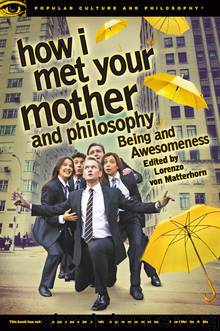
Author:von Matterhorn, Lorenzo
Language: eng
Format: mobi, epub
ISBN: 9780812698459
Publisher: Open Court
Published: 0101-01-01T00:00:00+00:00
III
Wait for It . . .
10
Why You Should Never, Never Love Thy Neighbor
RADU USZKAI AND EMANUEL SOCACIU
Kids, there are many neat, well-rounded, and inspiring stories about morality out there. Great thinkers in the history of philosophy have taught us that morality is about timeless principles, or about developing the virtues of a beautiful character, or about bringing as much happiness as possible to as many people as possible.
And then there are a few messier stories told by equally great thinkers who just couldn’t swallow any of those elegant formulas. Among these eccentric few we find two of the most intellectually engaging thinkers of modern times, whose doctrines show remarkable, if sometimes disturbing similarities: David Hume and . . . wait for it . . . Barney Stinson.
Hume’s Awesome Approach to Morality
David Hume tries to explain the task of the moral philosopher via a metaphor. Approaching the topic of morality (or, more generally, that of human nature), one could proceed “either as an anatomist or as a painter; either to discover its most secret springs and principles or to describe the grace and beauty of its actions” (letter to his bro Francis Hutcheson in 1739).
Or, to update the metaphor, we might choose either Barney’s approach, or Ted’s. While the job of the painter is surely important and not to be dismissed, it has to rest upon the foundations carefully laid down by the anatomist: even using the richest colors and conveying the most appealing attitudes, we couldn’t do justice to the beauty of a Helen or Venus without paying attention to the structures and proportions of the human body. Because it is impossible to employ both perspectives at the same time, the moral philosopher would have to choose the more fundamental, anatomist approach to morality. In other words the philosopher should be a keen observer of human realities and, as far as possible, an experimenter.
Still, Hume sees that doing that can be painful: “The anatomist presents to the eye the most hideous and disagreeable objects” (An Enquiry Concerning the Principles of Morals, Introduction). We might not like what we stumble upon. And Hume himself found out quite a few things using his method. In a much-quoted place he relegates Reason, arguably the flag-ship of almost any philosophical armada, to the role of a shabby little fishing boat anchored in the shallower part of the harbor.
Starting with Plato, philosophers usually teach us that moral action is always guided by reason, and its goal is to overcome passions, viewed as obstacles. Shockingly, for Hume it’s the other way round: reason alone can never be effective in motivating actions. It always has to be guided and ruled. “Reason is, and ought only to be the slave of the passions, and can never pretend to any other office than to serve and obey them” (A Treatise of Human Nature, Book 2, Part 3, Section 3). Kinky!
This disconcerting and rather BDSM picture of the interaction between reason and passions is the first of the two major hallmarks of Humeanism in moral philosophy.
Download
How I Met Your Mother and Philosophy by von Matterhorn Lorenzo.epub
This site does not store any files on its server. We only index and link to content provided by other sites. Please contact the content providers to delete copyright contents if any and email us, we'll remove relevant links or contents immediately.
Cecilia; Or, Memoirs of an Heiress — Volume 1 by Fanny Burney(32561)
The Great Music City by Andrea Baker(32021)
Cecilia; Or, Memoirs of an Heiress — Volume 2 by Fanny Burney(31958)
Cecilia; Or, Memoirs of an Heiress — Volume 3 by Fanny Burney(31944)
We're Going to Need More Wine by Gabrielle Union(19051)
All the Missing Girls by Megan Miranda(16043)
Pimp by Iceberg Slim(14519)
For the Love of Europe by Rick Steves(14155)
Bombshells: Glamour Girls of a Lifetime by Sullivan Steve(14079)
Talking to Strangers by Malcolm Gladwell(13375)
Norse Mythology by Gaiman Neil(13374)
Fifty Shades Freed by E L James(13245)
Mindhunter: Inside the FBI's Elite Serial Crime Unit by John E. Douglas & Mark Olshaker(9346)
Crazy Rich Asians by Kevin Kwan(9295)
The Lost Art of Listening by Michael P. Nichols(7507)
Enlightenment Now: The Case for Reason, Science, Humanism, and Progress by Steven Pinker(7315)
The Four Agreements by Don Miguel Ruiz(6767)
Bad Blood by John Carreyrou(6625)
Weapons of Math Destruction by Cathy O'Neil(6283)
